E-mail
agarino3@aol.com
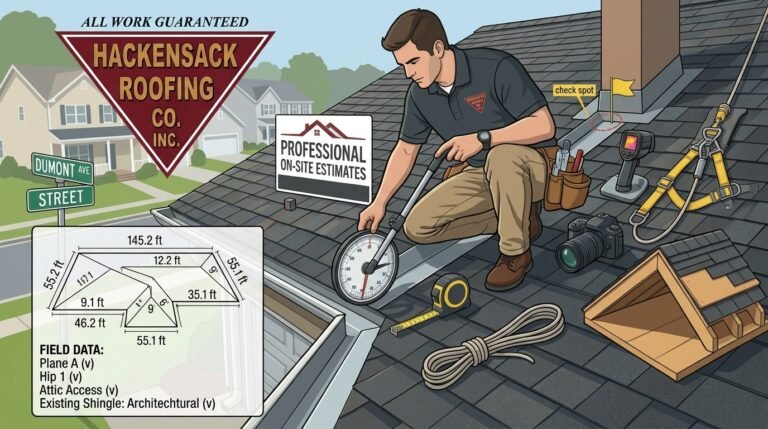
In a world of satellites, AI, and drones, there is no replacement for physical on-site inspection and measurement. Hackensack Roofing Company provides free estimates by qualified roofers to truly assess the unique characteristics of each roof.
Satellites, drones, artificial intelligence, and modern technologies are all great tools with limitations. A qualified roofer must examine the physical structure to assess existing damage, determine accurate material quantities, and identify structural vulnerabilities. Being on-site allows the roofer to see obstacles and hazards such as tree that may obstruct the view from a satellite or the flight path of a drone. This breakdown explains many of the items that our roofers from Hackensack Roofing Company consider when performing a thorough roofing inspection.
1. Roof Geometry and Area Measurements
Calculating the exact surface area of a roof requires more than measuring a house’s square footage from the ground. Roofers take detailed structural measurements, taking into account:
2. Decking and Structural Integrity Assessment
The exterior shingles are only as strong as the wooden deck beneath them. During the physical check, our roofing experts evaluate the foundation of your roof:
3. Ventilation System Audit
Proper airflow is essential for shingle longevity and energy efficiency. During the inspection, our roofing experts analyze your attic’s ventilation setup:
4. Flashing, Chimney, and Penetration Review
Water leaks most commonly occur where the roof meets a wall, chimney, or pipe. A physical inspection closely examines all transition points:
5. Gutter and Drainage System Evaluation
Finally, a complete physical inspection looks at how water exits the roofline:
The Foundation of an Accurate Quote
A detailed on-site inspection identifies material and labor needs and hidden structural issues that modern technology may miss. Hackensack Roofing’s experienced roofers use this assessment to provide accurate quotes and help prevent unexpected change orders. Although unforeseen damage remains possible, a thorough inspection helps minimize significant cost adjustments when investing in your home.